

 LinkedIn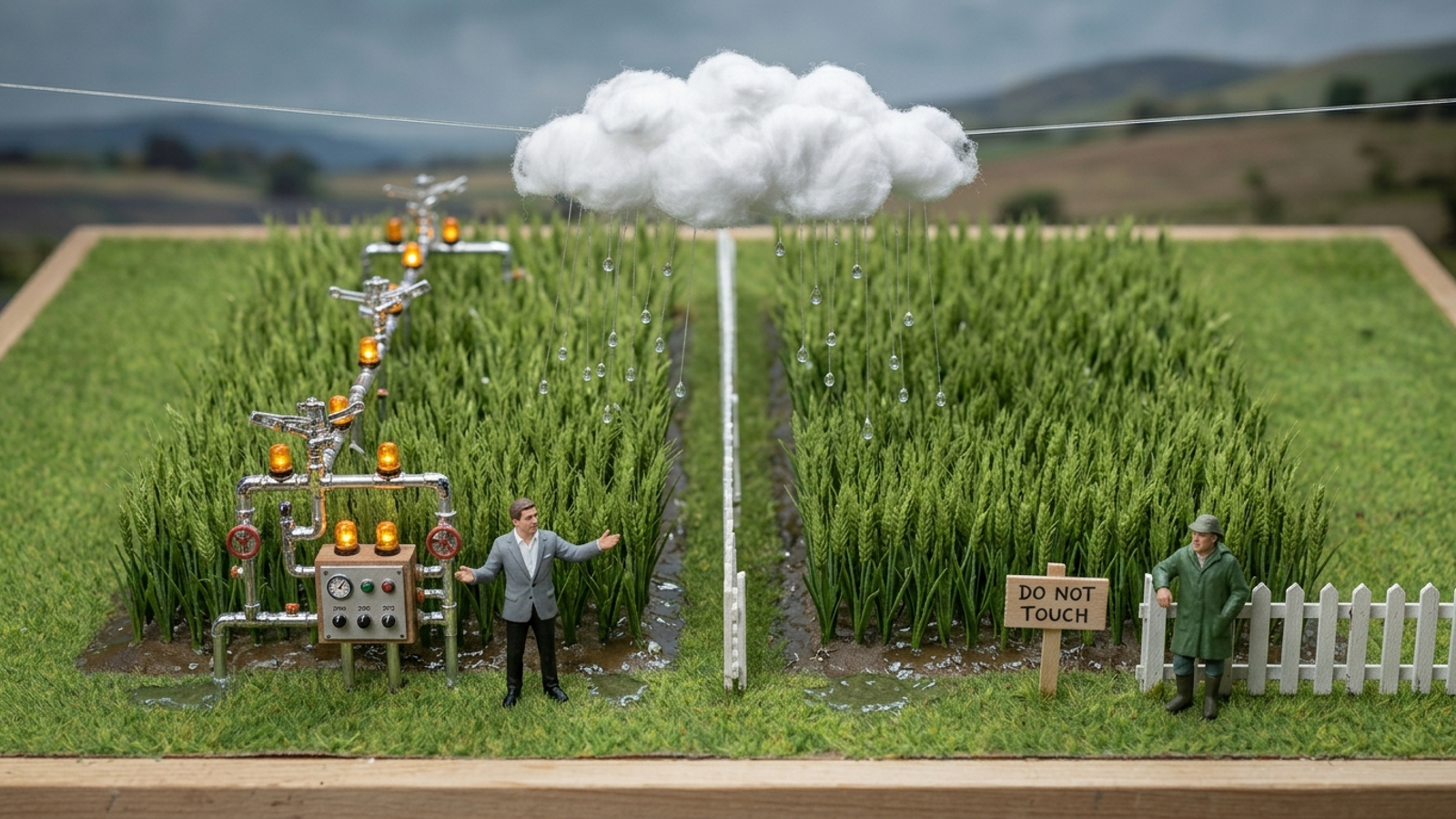
A new citation in an AI Overview is not proof your optimization tool earned it. Judge the tool by its dashboard and you might as well judge ad copy by the agency’s quarterly slide deck. First measure the noise; then change half your pages and hold out the rest. If citation lift cannot clear the noise band, the vendor does not get credit.
The question: did the tool cause the citations, or did the weather?
Start with the control-group instinct PPC operators already have
I spent years managing Google Ads accounts where someone would swap an ad headline in mid-November, watch sales jump during Cyber Week, and congratulate themselves on their copywriting. Without the original ad running under comparable conditions, that conclusion is worthless. The calendar changed, too.
AI search has its own weather. In an empirical study of 693,509 AI answers across more than 31,000 prompts, Parse found that repeat Google AI Overviews for identical queries shared only 31.5% of cited domains. Its reported domain churn rate for ChatGPT was 78.8%. A screenshot of a new citation is therefore a starting observation, not a result.
The test is a six-week holdout with an A/A baseline. Run it before you treat a vendor’s citation chart as a reason to renew.
Setup: build two comparable groups before opening the tool
Select 20–40 similar pages and split them at random
A before-and-after comparison cannot separate your edits from algorithm updates, seasonal demand, or competitor changes. SearchPilot makes the same point about isolated SEO before-and-after tests. You need treated pages and untouched pages observed at the same time.
Build the cohort before you inspect the tool’s recommendations:
- Keep page types alike. Choose 20 to 40 URLs that share a template: category pages, integration guides, or comparison pages. Do not pair a homepage with a local service page.
- Check basic eligibility. Use pages Googlebot can index, with non-zero search traffic and no severe legacy technical errors.
- Pair, then split. Rank candidates by organic impressions over the previous 90 days. Pair pages with roughly similar traffic, then flip a coin within each pair. Put one in Group A (treated) and one in Group B (holdout).
The pairs will not be identical. Randomization simply stops you from giving every promising page to the vendor before the test begins.
Freeze 30–60 non-brand buyer prompts
A tool can report impressive visibility on brand queries where your site is the obvious answer. That is not the question here. Map roughly 30 to 60 non-brand buyer prompts to the topics of your selected pages, typically two or three distinct prompts per URL. Choose a cohort size that lets you cover its pages within that prompt range.
If a page compares CRM pricing for small legal firms, prompts might include how much does legal CRM software cost and CRM platforms built for small law practices. Record which URL each prompt belongs to. Then freeze both the wording and the page mapping. A prompt added in week 4 has no two-week baseline.
If you are still deciding whether a product recommends work or performs it, our breakdown of tools that help you get featured in Google AI Overviews is useful before you choose what to test. Once the protocol starts, keep the prompt set fixed.
Sample the same engines on a fixed schedule
One Tuesday-morning query is an anecdote. In SISTRIX’s analysis of 82,619 prompts, cited sources changed substantially week to week across a 17-week evaluation. AuthorityTech’s 125-day tracking study likewise reported days when even frequently cited domains were absent. In a separate daily tracking experiment posted to r/aeo, only 2% of queries cited identical websites across three consecutive days.
Query the frozen set across Google AI Overviews, ChatGPT Search, and Perplexity on the same every-48-hours schedule throughout the six weeks. Use automated, incognito sessions without search history, and keep the method consistent. Record the engine, prompt, assigned page, date, and answer each time. Consistency will not remove retrieval noise; it will let you see it.
Weeks 1–2: run the A/A baseline
Leave both groups untouched for 14 days
This is the part teams skip. They buy a tool, apply its first recommendations, and call the next upward slope a win. Instead, leave the copy, schema, metadata, and internal links on both groups alone for 14 full days. Run the scheduled prompts and log whether each assigned URL appears as a clickable citation or source chip.
Both groups are still untreated. That is what makes this an A/A baseline: you are measuring the gap that appears when nobody has applied the vendor’s fixes. GrowthBook’s experimentation material describes A/A testing as a way to inspect an experiment’s natural variation before reading a treatment result.
Set the noise band from the gap between groups
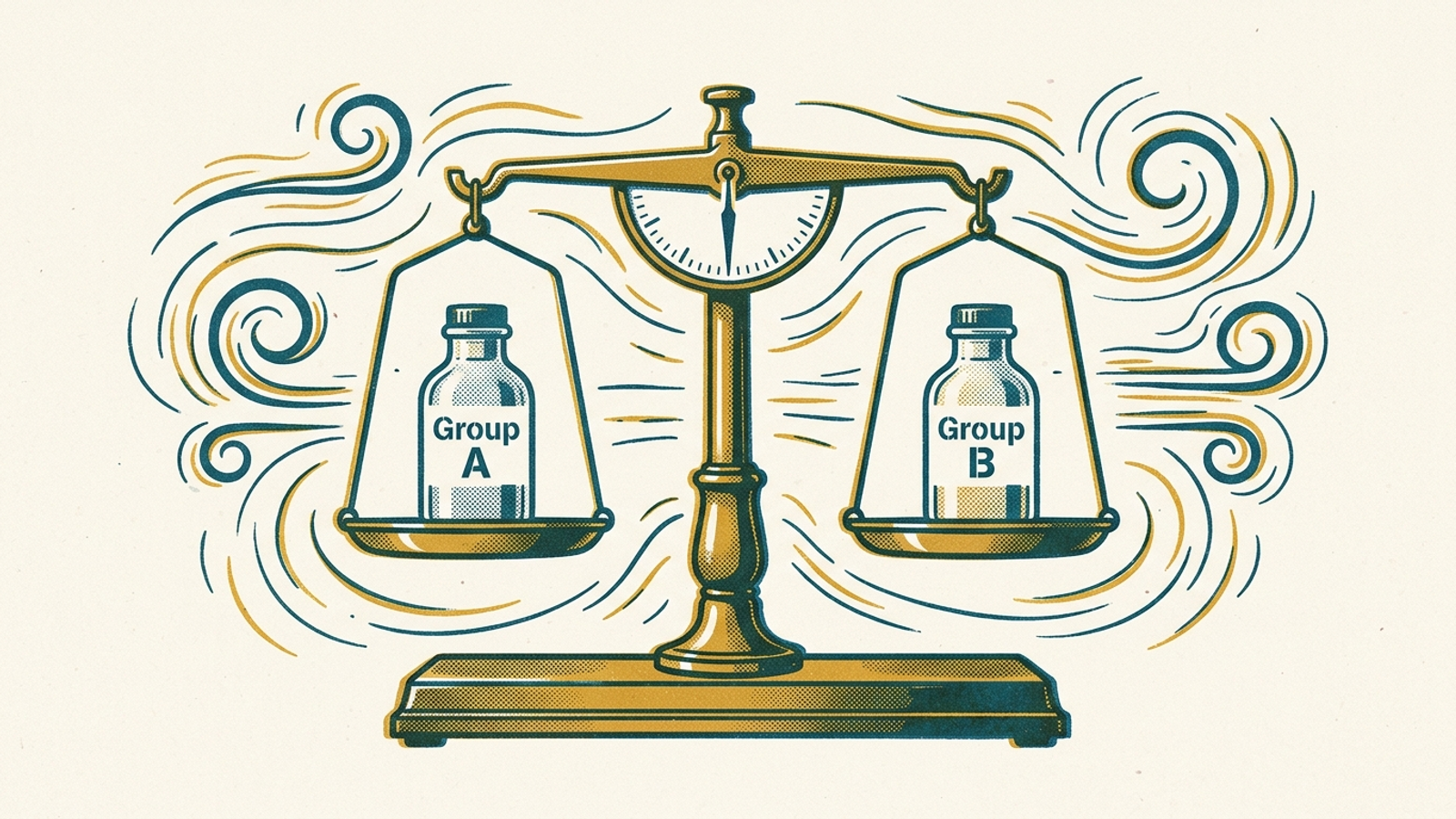
For each sampling date, calculate the citation rate for each group: the share of its assigned prompt runs that cited the assigned URL. Then record Group A’s rate minus Group B’s rate. Watch how that between-group gap moves across the two weeks.
Say A averages 18% and B averages 16%. The baseline gap is two percentage points. If the dated gaps wander roughly eight points from that baseline gap during the untouched period, treat a later change of only a few points with suspicion. Do not use the swing within A alone as the hurdle; the holdout may be swinging with it. And do not call this short baseline a precise statistical significance test. It is a practical check against awarding a vendor the weather.
Keep that baseline gap and its observed noise band in the sheet before day 15. Changing the hurdle after seeing the result is another way to make a dashboard look clever.
Weeks 3–6: change Group A and protect Group B
Apply the recommendations, but log the work by type
On day 15, export the tool’s recommendation queue for the 10 to 20 treated URLs. Apply those recommendations to Group A only. Leave Group B alone. In a plain spreadsheet, record the date, exact URL, and change made.
Separate the changes into two buckets:
- Content-gap fixes: added comparisons, answers to related buyer questions, or clearer lists and tables.
- Technical fixes: schema repairs, canonical corrections, rendering changes, or removal of bot-blocking headers.
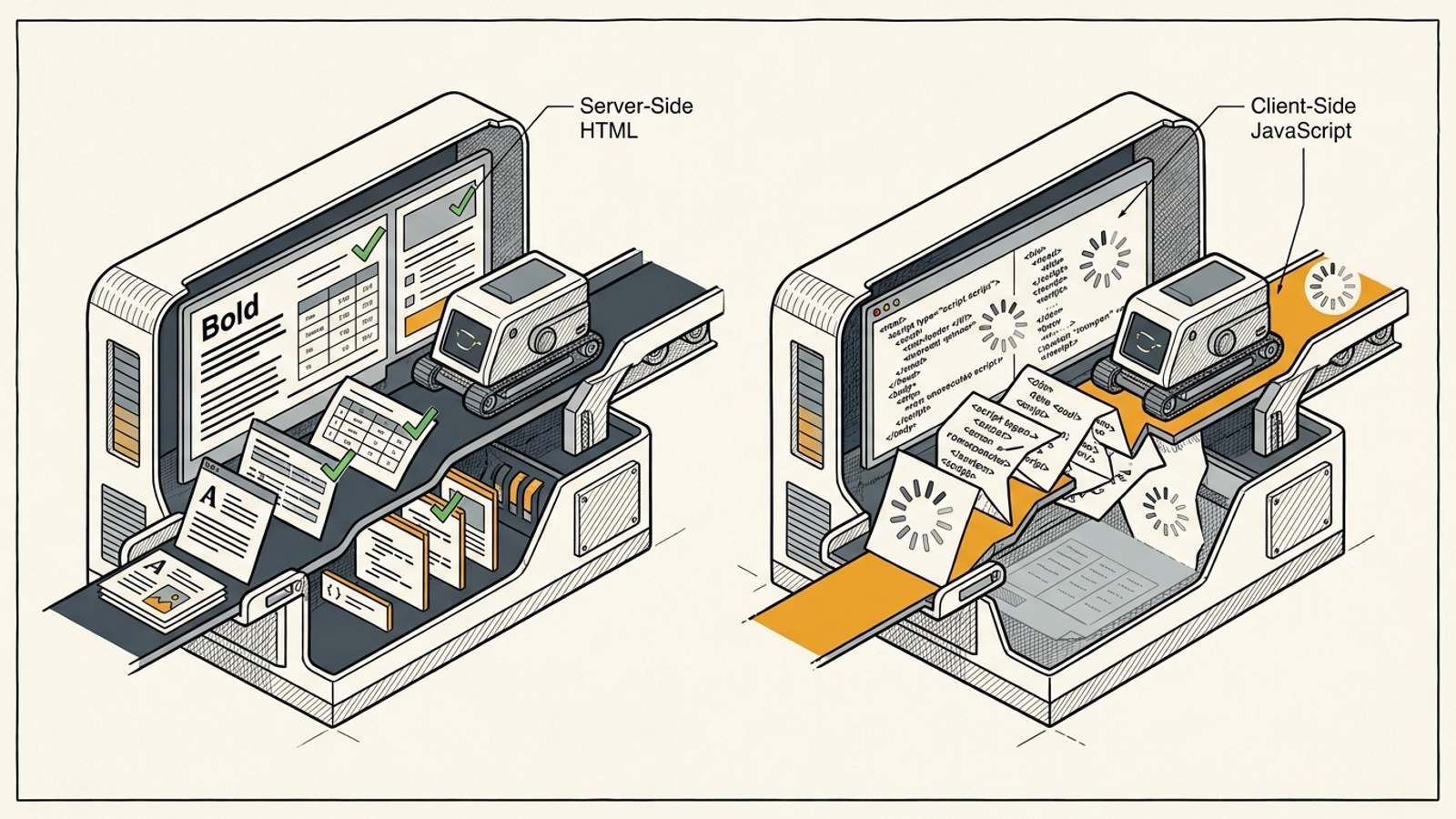
That distinction matters because the mechanisms differ. A rendering fix might make information available to a crawler that could not previously retrieve it. An added paragraph might give an engine a better answer to a particular prompt. Similarweb’s log-file research describes limits in how non-Google AI crawlers fetch JavaScript. If a comparison table depends on client-side rendering, check whether those crawlers can retrieve its contents rather than assuming the table is visible to them.
The aggregate result will tell you whether the package of fixes helped. The change log helps you investigate which kind of work is worth repeating. If the tool merely produces a queue your team must execute, our look at whether AI visibility software gets you cited or just tracks who did explains why that distinction matters.
Do not “just tidy up” a holdout page
An SEO lead spots an old statistic on a Group B page and fixes it because it takes two minutes. A copywriter adjusts a heading. Someone rebuilds the internal links. Now the holdout has received work, and its change no longer cleanly represents what happened without the tool.
Keep Group B untouched through day 42: no copy edits, schema adjustments, or internal-link restructuring. Restrict CMS access to those URLs if that is what it takes. The holdout’s job is to absorb the same outside turbulence as Group A, from competitor rewrites to changes in search results. It cannot do that job if your team keeps improving it.
What to measure every 48 hours
Track citations, mentions, and crawler requests separately
Keep the same prompt schedule from the baseline and record three measures for each cohort:
- Page citation rate: The share of a page’s assigned prompt runs in which that exact URL appears as a clickable citation or source chip. Count a run once, even if the URL appears more than once.
- Brand mention rate: The share of runs that name your company or product in the answer, whether or not they link to you.
- Crawler requests: Requests to the selected URLs in server logs, filtered by user-agent. Keep these separate from citations.
Server logs answer a different question from the prompt runs: did a crawler request the page? JavaScript-based web analytics will not show bot requests that never execute the tracking tag. In its analysis of 101,024 requests, Humans With AI distinguished OpenAI’s ChatGPT-User, GPTBot, and OAI-SearchBot user-agents. A single “AI bot traffic” total would blur different kinds of activity.
Check requests to treated pages after their changes go live. If you see no relevant fetches, be cautious about attributing an immediate citation change to newly edited copy. But flat crawler counts do not prove an engine never used the page, and a fetch does not prove the tool caused a citation. Logs help you interpret the timeline; the treated-versus-holdout citation comparison remains the outcome test.
With automated prompt collection, reviewing the sheet can take about 45 minutes a week. That is a better use of the time than admiring a proprietary readiness score.
Day 42: calculate lift against the holdout
A gain inside the noise band is not a win
Calculate the average citation rate for each group in weeks 3–6 and subtract its own weeks 1–2 baseline rate. Then subtract the holdout’s change from the treated group’s change:
Net lift = (A after − A baseline) − (B after − B baseline).
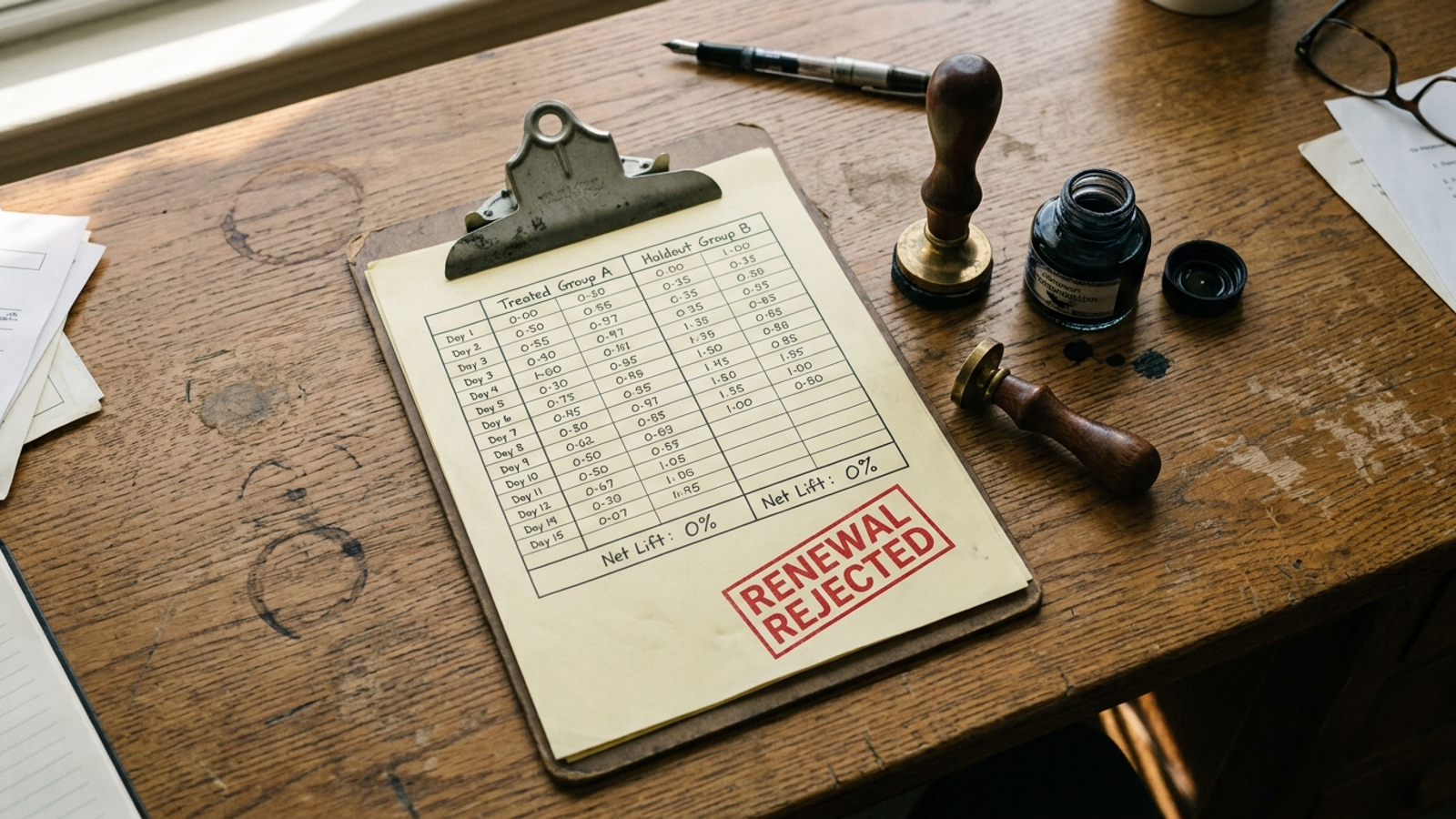
Say treated pages gain seven percentage points while holdout pages gain five. Net lift is two percentage points. If your untouched A/A comparison showed gaps moving by around eight points, that result has not cleared your practical noise band. Calling the full seven-point gain a vendor win would give it credit for the five points your untouched pages gained, too.
Lift inside the baseline noise band is an inconclusive result, not an optimization win. The band is a guardrail, not a formal guarantee. Its purpose is to keep ordinary retrieval volatility out of the renewal slide deck.

Read engine-specific lift as a clue, not a diagnosis
If net lift clears the noise band, break it out by engine. Different patterns point to different follow-up checks; none identifies a cause on its own.
| Engine response | What to investigate | Next step |
|---|---|---|
| Lift across ChatGPT Search, Perplexity, and AI Overviews | Whether a structural or content change made the pages easier for several systems to retrieve or use. | Review the change log, then consider rolling the effective fixes onto the holdout pages after the test. |
| Lift in Google AI Overviews only | Google-specific visibility or indexing changes that did not carry across engines. | Keep the Google result in scope; do not sell it internally as universal AI visibility. |
| Lift in Perplexity only | Whether a recent content update or another retrieval change coincided with the gain. | Keep measuring before treating the pattern as a durable gain. |
Do not turn this table into a second vendor dashboard. A pattern tells you where to look next, not which recommendation deserves a trophy.
Extend only when the observation window was too short
Crawling schedules are irregular. If relevant crawlers first request treated URLs in week 5, the four-week intervention period may offer too little post-fetch observation. Extend the same protocol for two more weeks and keep Group B locked down. Do not declare success or failure from a narrow window.
If treated pages were fetched repeatedly soon after day 15 and net citation lift is still near zero on day 42, do not extend merely because you dislike the answer. Decide whether another specific measurement window is justified; otherwise, record that the recommendations did not clear this test.
Who should skip the holdout
Too few comparable pages will give you a noisy answer
If your site has fewer than 20 distinct, indexable landing pages, or organic traffic barely registers, skip this protocol. Four blog posts and a contact form cannot carry a useful split. With only ten pages, a single page changing citation status can dominate either group’s rate.
For a small site, do the foundational work instead: publish useful pages and fix obvious crawl blockers. Come back to a holdout when you have enough comparable pages and prompts to make the comparison worth six weeks of attention. Testing is not automatically more rigorous than execution.
Make the renewal depend on the holdout, not the dashboard
A vendor can show readiness ratings, content-gap checklists, and a handsome chart of newly detected citations. None answers the question in this protocol. Did the work on Group A lift citations beyond what happened on untouched Group B, and beyond the gap you saw before anyone changed a page?
This is why we built groas as an autonomous growth engine rather than another advisory layer. Specialized models execute work across paid and organic search continuously, while a named human strategist sets direction and owns accountability. The alternative is familiar: pay for a list of recommendations, then pay your own team to write, code, and deploy them. I have spent enough time doing that work by hand to know the difference between a useful intervention and a better-looking report.
At renewal, open the six-week sheet. If the tool’s recommendations cleared the baseline noise band against the holdout, you have a reason to investigate and repeat what worked. If they did not, do not buy the citation chart. Cancel the subscription and put the budget toward doing the work.